
Understanding Microgreens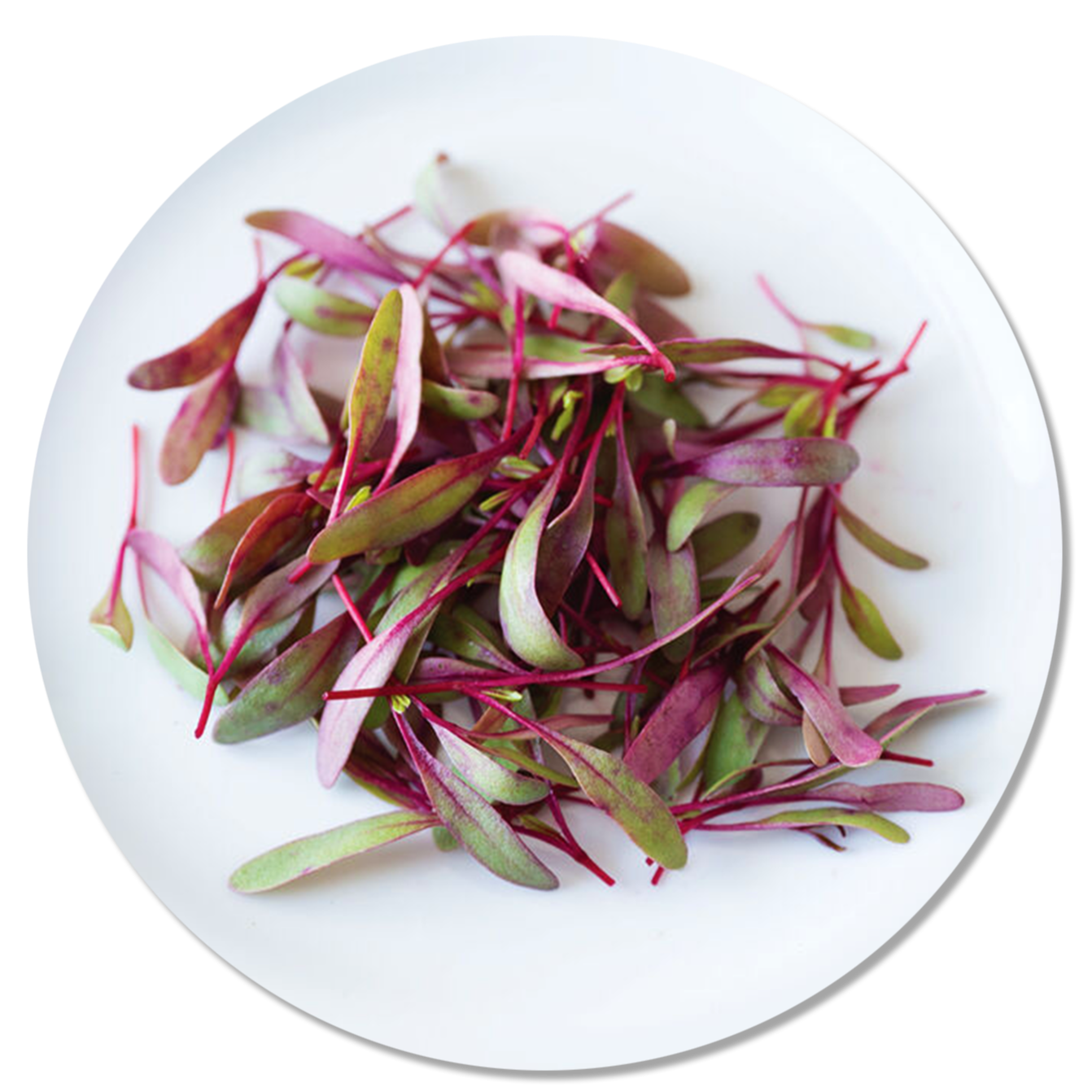
Small plants. Surprisingly big personalities.
Microgreens may be tiny, but there's a lot going on in those few inches of plant.
They can add intense flavor, color, texture, and visual interest to a dish, which is why chefs have loved them for years. But microgreens aren't simply miniature garnishes. They're young edible plants harvested at a stage when they're actively growing—and they can also pack an impressive nutritional punch.
So, what exactly is a microgreen?
Microgreens are young edible plants grown from the seeds of vegetables, herbs, and other plants.
They're harvested after germination but before the plant reaches maturity, generally once the first seed leaves—called cotyledons—have fully developed and the first true leaves may be beginning to appear.
Unlike sprouts, microgreens are grown in a growing medium and harvested above the root, so you eat the tender stems and leaves.
That relatively short growing period is part of what makes them interesting. At this stage, the young plant is rapidly developing and contains a concentrated assortment of vitamins, pigments, minerals, antioxidants, and other plant compounds. Research has found that their nutritional profiles can be surprisingly dense, although the exact nutrients and concentrations vary considerably from one variety to another.
Why use microgreens?
Because they can do an unusual number of jobs for something so small.
They can make a simple dish visually striking. They can introduce a flavor that complements or contrasts with the ingredients already on the plate. They can add crunch, tenderness, freshness, or height. And they can increase the diversity of plant foods and nutrients in a meal.
For us, that's what makes microgreens interesting.
They're beautiful—but beauty is really just the beginning.
What's the difference between microgreens, sprouts, shoots, and tendrils?
They're all young plants, but they're grown and harvested at different stages.
Sprouts
Sprouts are the youngest of the bunch.
They're typically germinated in water and harvested very early in the plant's development. The seed, root, stem, and emerging leaves are generally eaten together.
Because sprouts are grown differently and the entire plant is consumed, they are a distinct product from microgreens.
Microgreens
Microgreens are allowed to grow longer than sprouts.
They develop visible stems and leaves and are grown in a medium that supports the roots. When harvested, the plant is cut above that growing medium, leaving the roots behind.
Depending on the plant, the result can be delicate and mild or surprisingly bold. Radish and mustard microgreens, for example, retain much of the peppery character you'd expect from their mature counterparts.
Shoots
Shoots are a broader culinary term for tender young plant growth.
Pea shoots and sunflower shoots are common examples. They're generally larger and more substantial than many traditional microgreens and can play a bigger role in a dish.
Instead of disappearing decoratively into the background, shoots are perfectly capable of becoming part of the salad, sandwich, entrée, or side themselves.
Tendrils
Tendrils are the delicate curling structures certain climbing plants use to grab onto nearby supports.
Peas are the classic example.
Pea tendrils are especially popular in restaurants because they bring fresh pea flavor along with texture, movement, height, and a rather unfair amount of visual drama.
The terminology can overlap somewhat—particularly between shoots and microgreens—but the basic distinction is simple: sprouts are eaten at the earliest stage, while microgreens and shoots are allowed to develop further and are harvested above their growing medium.
Are microgreens nutritious?
Very.
Microgreens aren't all nutritionally identical, so there isn't one universal nutrition profile. The variety, growing conditions, harvest stage, and even light exposure can influence the nutrients a particular crop contains.
But research consistently shows that microgreens can be rich sources of vitamins, minerals, carotenoids, polyphenols, and other antioxidant compounds.
USDA researchers studying 25 different microgreen varieties found particularly high concentrations of several important nutrients. Among the varieties studied, red cabbage stood out for vitamin C, cilantro for carotenoids, garnet amaranth for vitamin K, and green daikon radish for vitamin E.
In other words, their nutritional value isn't simply that they're "healthy." Different microgreens bring different things to the table.
Vitamins
Depending on the variety, microgreens can provide meaningful amounts of vitamins including:
Vitamin C, which contributes to normal immune function and collagen production
Vitamin K, which plays an important role in normal blood clotting and bone health
Vitamin E, an antioxidant nutrient that helps protect cells from oxidative damage
Carotenoids, including beta-carotene, which the body can convert to vitamin A
Research comparing microgreens with mature leaves has found that some microgreen varieties contain higher concentrations of specific vitamins and carotenoids than their mature counterparts.
Minerals
Microgreens can also provide minerals such as potassium, calcium, magnesium, iron, zinc, and others, although both the amount and mineral profile vary considerably by species. USDA research has specifically investigated the mineral composition of multiple microgreen varieties because of their potential contribution to nutrient-dense diets.
Antioxidants and phytonutrients
Some of the most interesting compounds in microgreens aren't traditional vitamins at all.
Plants naturally produce a huge variety of compounds known broadly as phytonutrients. Microgreens can contain carotenoids, flavonoids, phenolic compounds, anthocyanins, chlorophylls, and other bioactive substances with antioxidant activity.
Certain plant families bring their own specialties as well.
Microgreens from the Brassica family—which includes broccoli, kale, cabbage, radish, mustard, and arugula—can contain compounds called glucosinolates. These compounds and their breakdown products have received considerable scientific attention as researchers investigate their potential roles in human health.
Are microgreens more nutritious than mature vegetables?
Sometimes—but it's a little more complicated than the internet likes to make it sound.
Some microgreens have been shown to contain significantly higher concentrations of particular vitamins or plant compounds than mature versions of the same vegetable. Other nutrients may be similar, and the differences vary tremendously by variety.
So rather than claiming that every microgreen is automatically "X times healthier" than every mature vegetable, we prefer the more accurate version:
Microgreens are remarkably nutrient-dense little plants, and different varieties offer different nutritional strengths.
They're also not a replacement for eating vegetables.
Think of them as another very flavorful way to add plants—and potentially a concentrated mix of micronutrients and phytonutrients—to what you're already eating.
Are microgreens just a garnish?
Definitely not.
They can make a beautiful garnish, but treating microgreens only as decoration misses most of the fun.
Different varieties can bring surprisingly distinct flavors—peppery, mustardy, sweet, earthy, citrusy, herbal, vegetal, or mildly bitter—along with a wide range of textures and colors.
That means they can function as an ingredient, not merely something placed delicately on top of the plate at the last possible second.
Microgreens and shoots can work beautifully in:
Salads and grain bowls
Sandwiches and wraps
Tacos
Soups
Seafood dishes
Beef, pork, and poultry
Pasta and risotto
Eggs and brunch dishes
Appetizers
Cocktails
Cheese and charcuterie boards
Desserts
A variety such as mustard can contribute genuine heat. Pea shoots can add sweet, fresh pea flavor. Basil microgreens can bring concentrated herbaceous notes. More delicate varieties can contribute subtle flavor while adding texture and color.
For chefs in particular, that's the real appeal:
Microgreens can deliver flavor, texture, color, height, aroma, and visual interest all at once.
They're perfectly happy being a garnish. They'd just rather not be typecast.